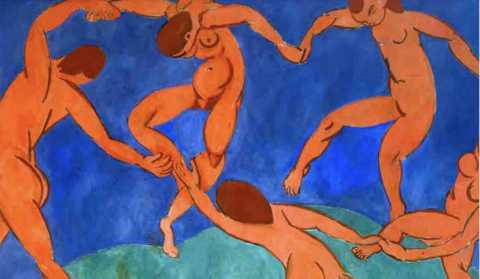
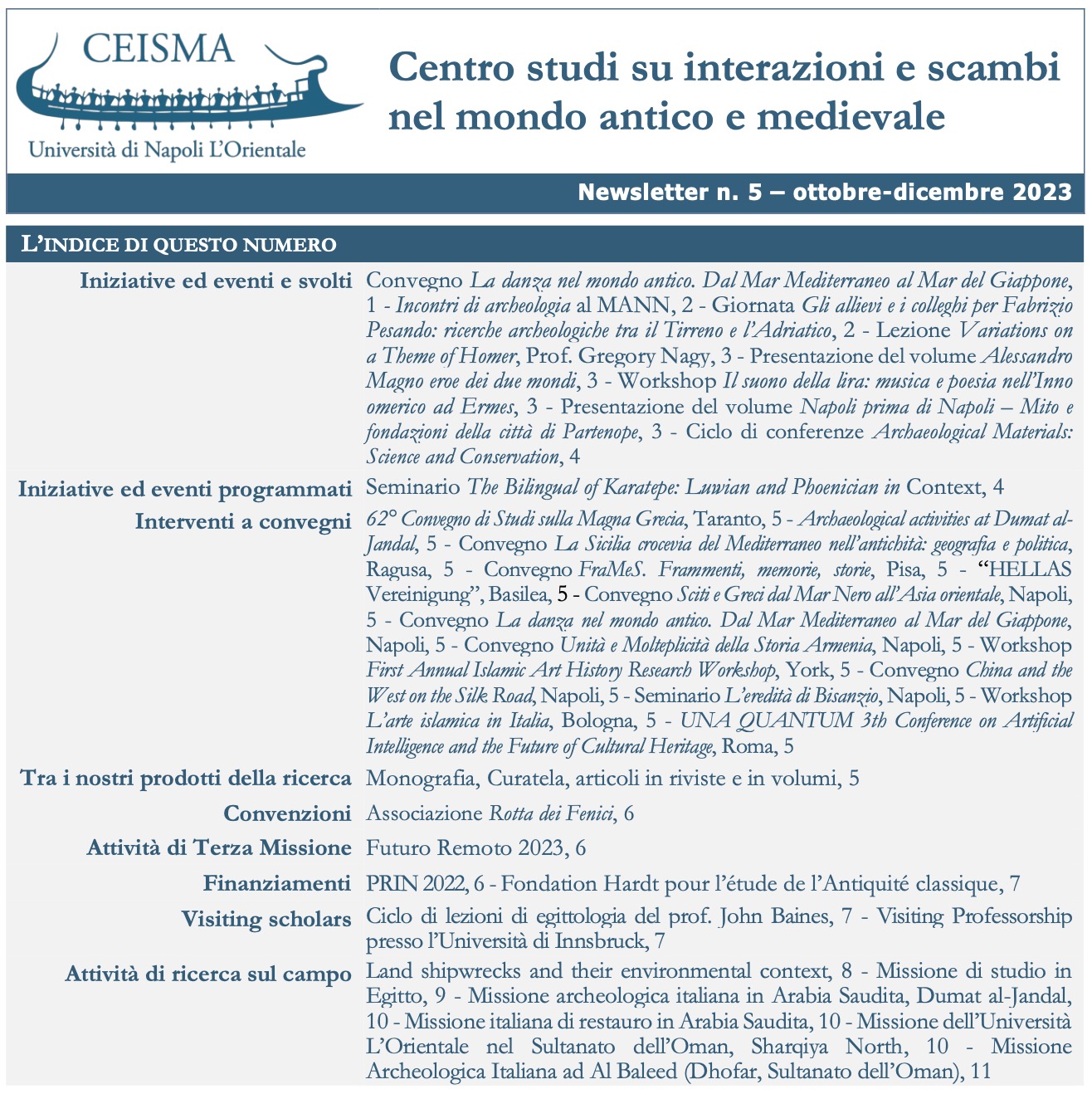
From November 6 to 8, the conference Dance in the Ancient World: From the Mediterranean Sea to the Sea of Japan will be held in the Conference Hall of Palazzo Du Mesnil.
Through the diverse expertise of the speakers (Archaeology, Iconography, Philology, Ethnography), the conference explores the theme of dance as a central aspect of the functioning of ancient societies and its multiple meanings and manifestations, fostering dialogue between different cultures across the wide geographic span from the Mediterranean Sea to the Sea of Japan.
Due to its high scientific and cultural value, the conference is organized in synergy with ISMEO and under the patronage of the National Academy of Dance and the Teatro di San Carlo in Naples.
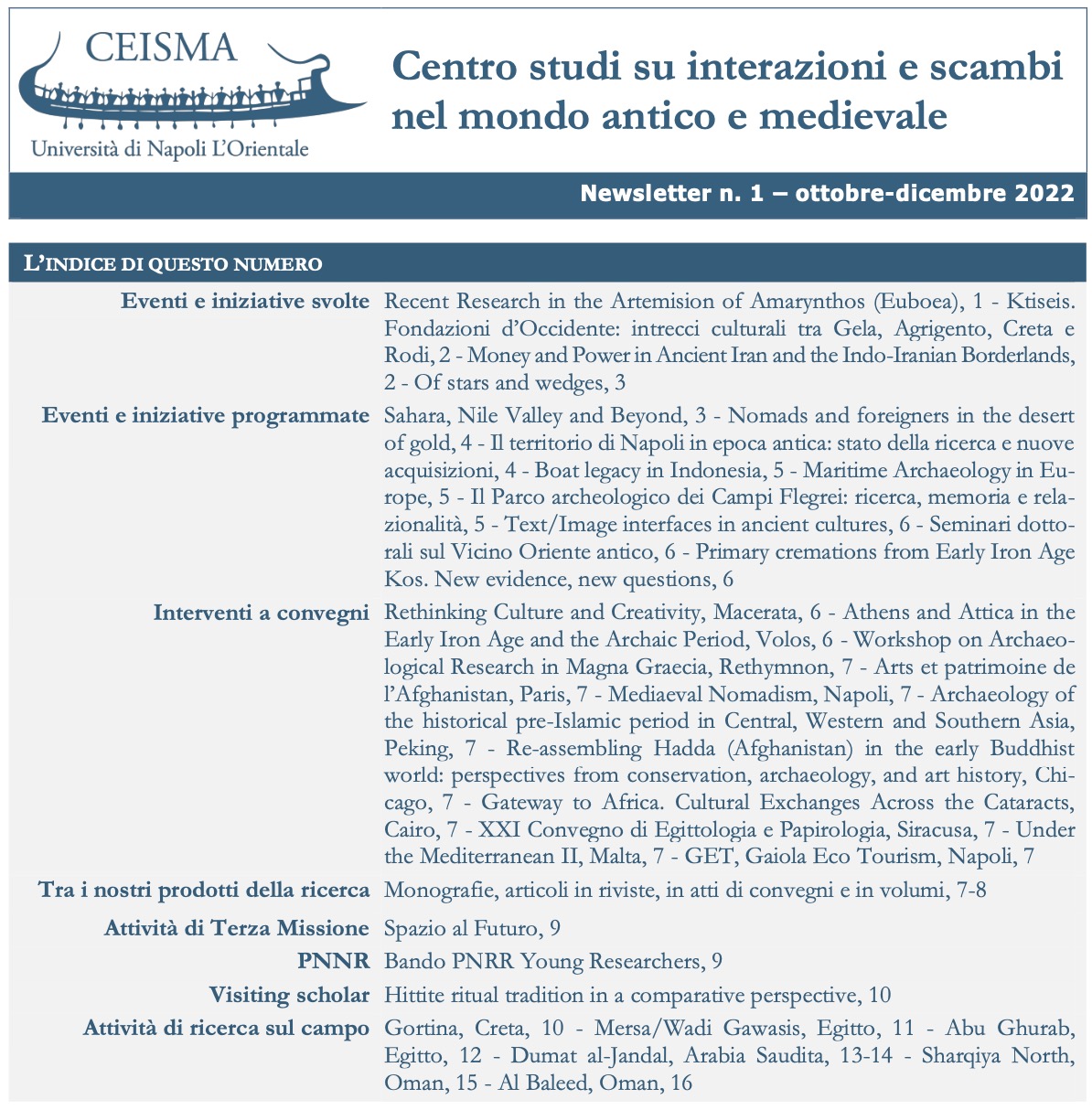
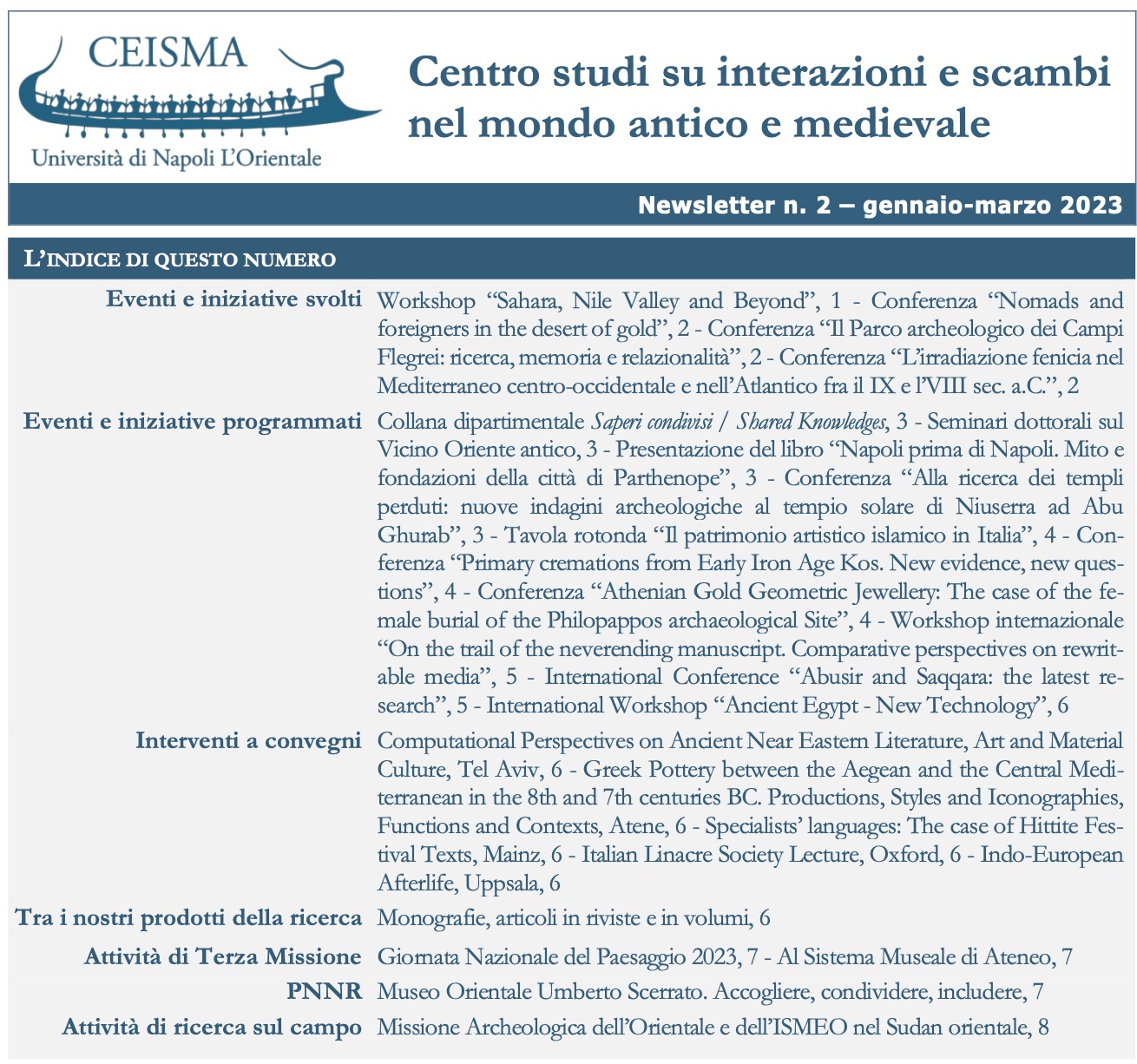
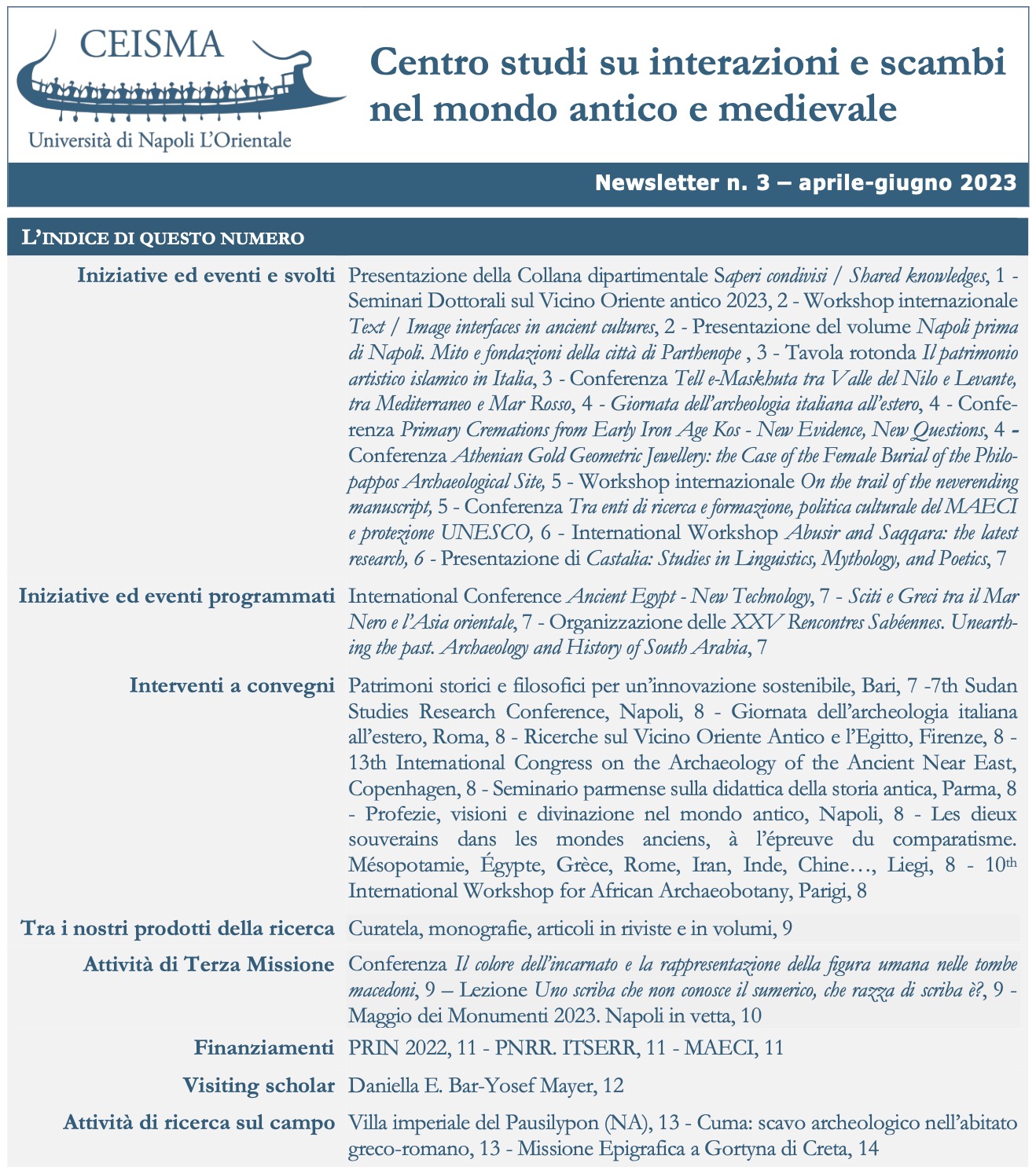
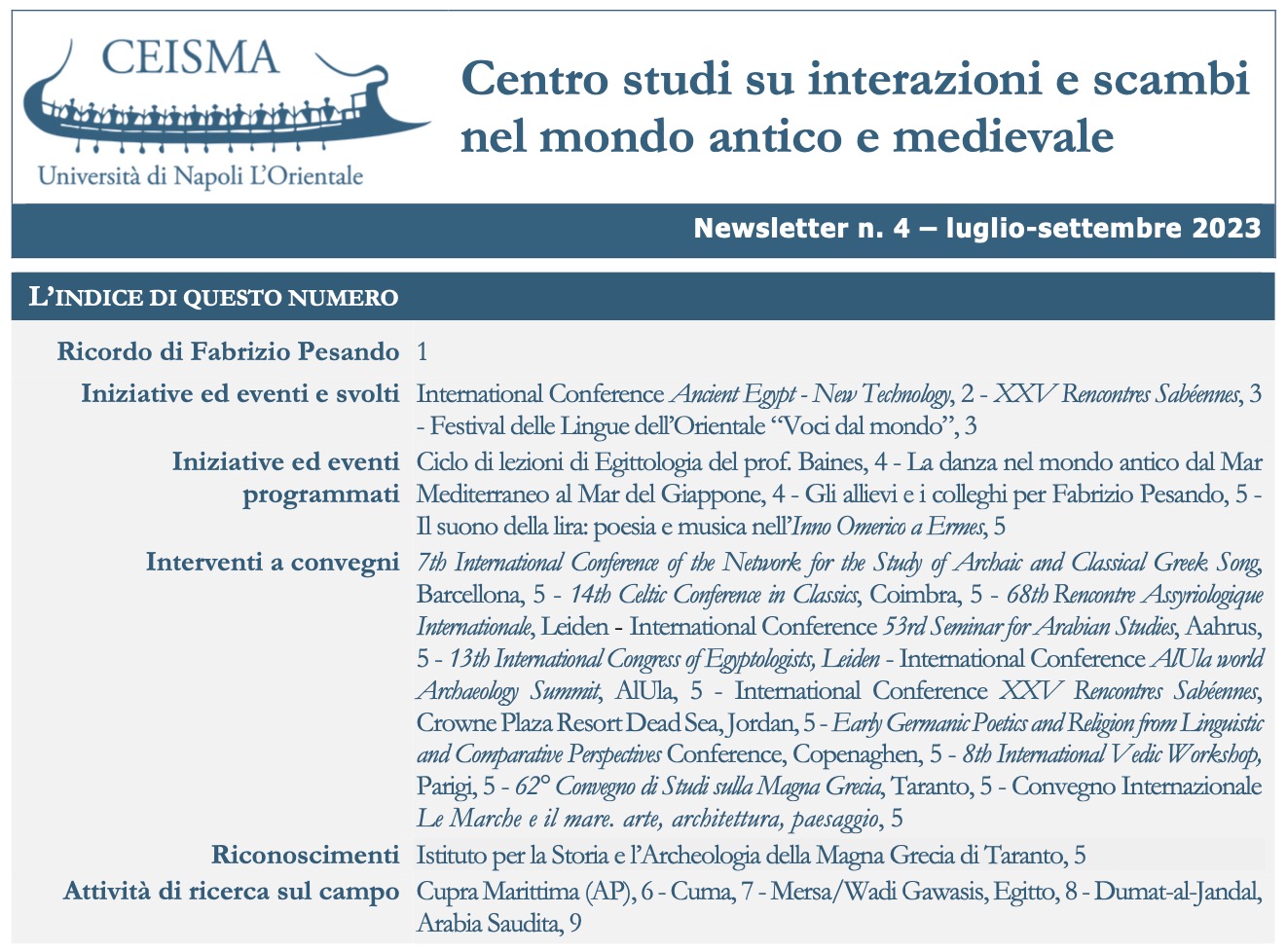
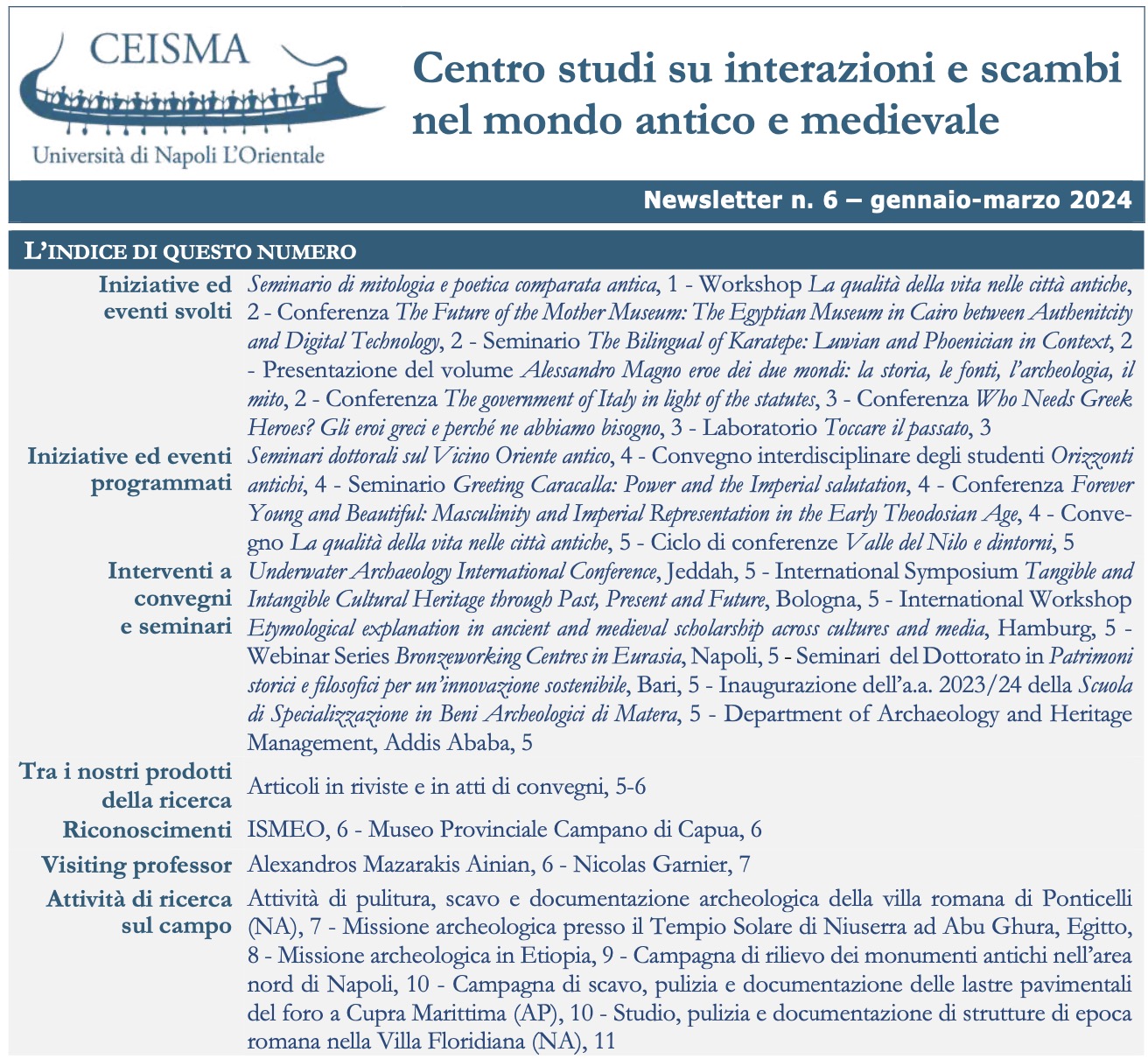
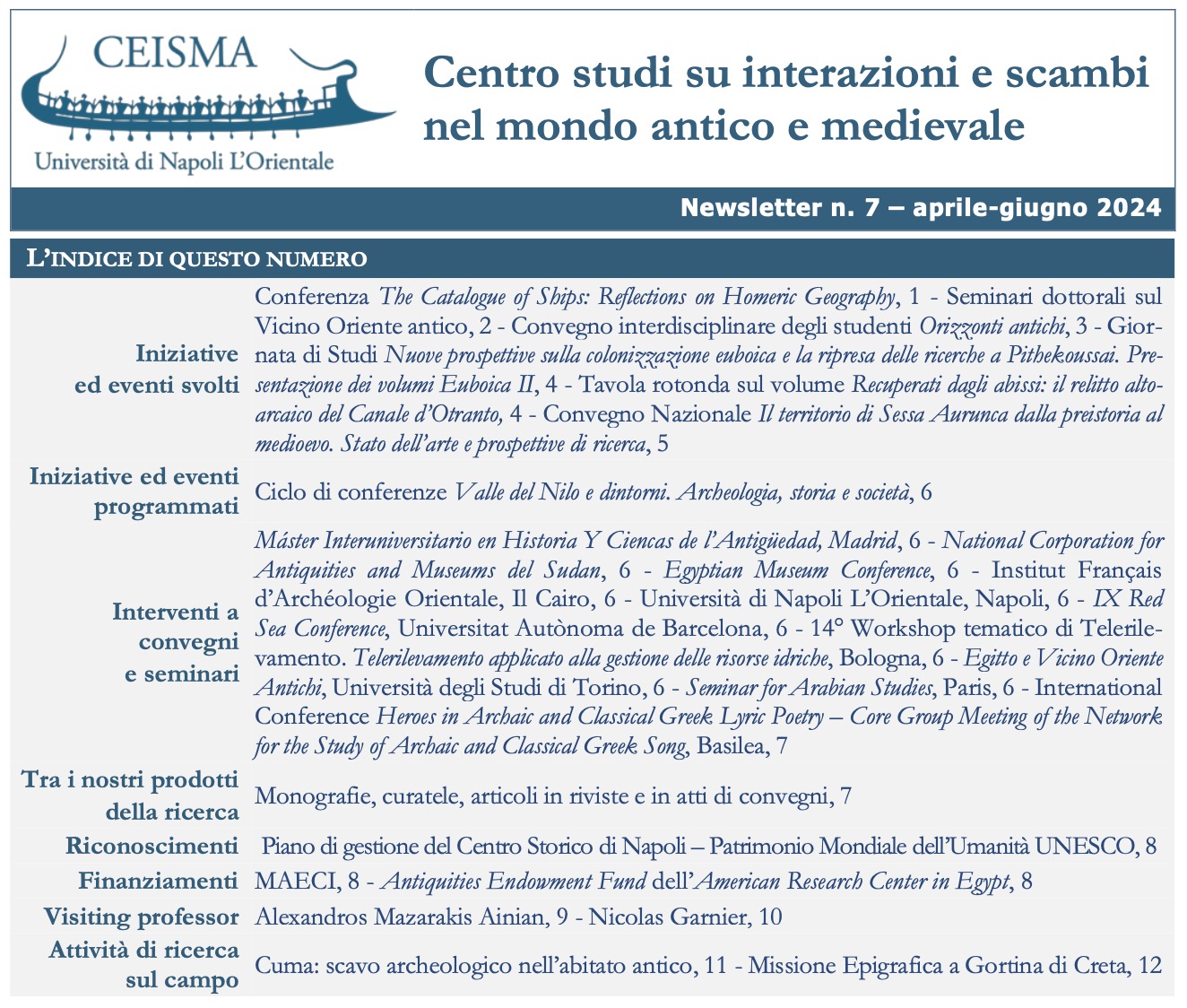
The Newsletter is the quarterly information bulletin of the Study Centre for Interactions and Exchanges in the Ancient and Medieval World. The Centre designs and implements scientific and educational initiatives within the framework of the Department of Excellence Project of the Department of Asia, Africa, and the Mediterranean (DAAM) at the University of Naples L’Orientale.
The CEISMA schedules lecture series led by foreign professors and researchers, specialists in the Centre’s areas of interest, aimed at students and PhD candidates.
In the academic years 2021/22, 2022/23, and 2023/24, CEISMA hosted as Visiting Professors Marie Cronier, Hariclia Brecoulaki, Asnu Bilbam Yalçin, Michael Alram, Daniella Bar-Yosef Mayer, John R. Baines, Nicolas Garnier, Alexandros Mazarakis Ainian, and Giorgos Sanidas. They conducted well-attended 12-hour courses for students and PhD candidates.
Marie Cronier - a.a. 2021/22
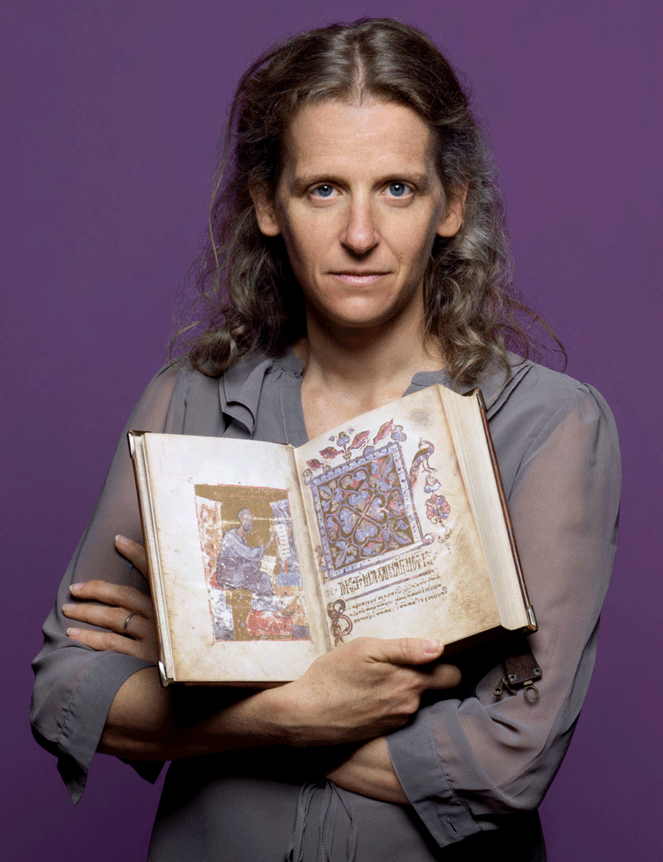
Marie Cronier
Marie Cronier, Ricercatrice presso l’Institut de recherche et d’histoire des textes (IRHT-CNRS) Section grecque et de l’Orient chrétien (Paris), è specialista di paleografia, codicologia e filologia e storia dei testi greci; è esperta di manoscritti di contenuto scientifico (medecina e botanica, specialmente nel settore delle piante di uso farmaceutico). Lavora a un progetto di recensione e analisi dei manoscritti di Dioscoride in arabo e in siriaco all’interno del progetto ERC Floriental (http://www.orientmediterranee.com/spip.php? article1136) e all’edizione critica del testo greco del De materia medica di Dioscoride. Partecipa al progetto ANR I-Stamboul (http://i-stamboul.irht.cnrs.fr/), sulla storia della biblioteca del monastero della Santa Trinità sull’isola di Chalki (16-20 secolo) e più in generale è autrice di numerose pubblicazioni sulla storia e la trasmissione dei testi scientifici a Bisanzio e sulle loro traduzioni latine arabe e siriache. Nel periodo del suo soggiorno a Napoli (novembre 2021) ha tenuto un corso in italiano, in presenza, ma seguito anche da numerosi studenti in modalità telematica, sulla tradizione degli erbari illustrati, intitolato Intorno al trattato di Dioscoride Sulla materia medica: gli erbari greci dall’antichità al Rinascimento e la loro trasmissione in Oriente e in Occidente.
Hariclia Brecoulaki è la specialista per eccellenza della pittura greca antica, punto di riferimento internazionale per questa materia. Dal 2009 svolge la sua attività di ricerca presso la sezione di antichità greche e romane del National Hellenic Research Foundation, ad Atene, dove dal 2017 è Senior Researcher. Ha studiato a Parigi, Université Paris I-Panthéon Sorbonne, dove ha conseguito il dottorato in archeologia con la tesi La peinture funéraire en Macédoine. Emplois et fonctions de la couleur IVe-IIe s. av. J.-C., edita da De Boccard 2006, che costituisce tuttora l’opera fondamentale sulle tombe dipinte macedoni. È attualmente Principal Investigator nella ricerca HFRI dedicata a “The Hunt Frieze of Tomb II at Vergina, Greece: A Novel Interdisciplinary Approach for the Scientific Investigation and Revisualization of a Painted Masterpiece of the Classical World” (2022-2025). Ha pubblicato contributi sui principali contesti pittorici del Mediterraneo antico, dal mondo miceneo (Mycenaean Painting in Context. New Discoveries, Old Finds Reconsidered, co-edited with J. Davis and S. Stocker, 2015) all’Italia preromana (L’esperienza del colore nella pittura funeraria dell’Italia preromana, Napoli 2001), promuovendo un approccio che valorizza indagini tecniche sui pigmenti, le modalità del loro utilizzo e sui supporti pittorici come base indispensabile per valutazioni storico-artistiche e di contesto. Si segnala il volume da lei curato e in corso di stampa Archaeology of Colour. Technical Studies in Greek and Roman painting and polychromy, Ιnstitute for Historical Studies, HNRF, Athens 2021.
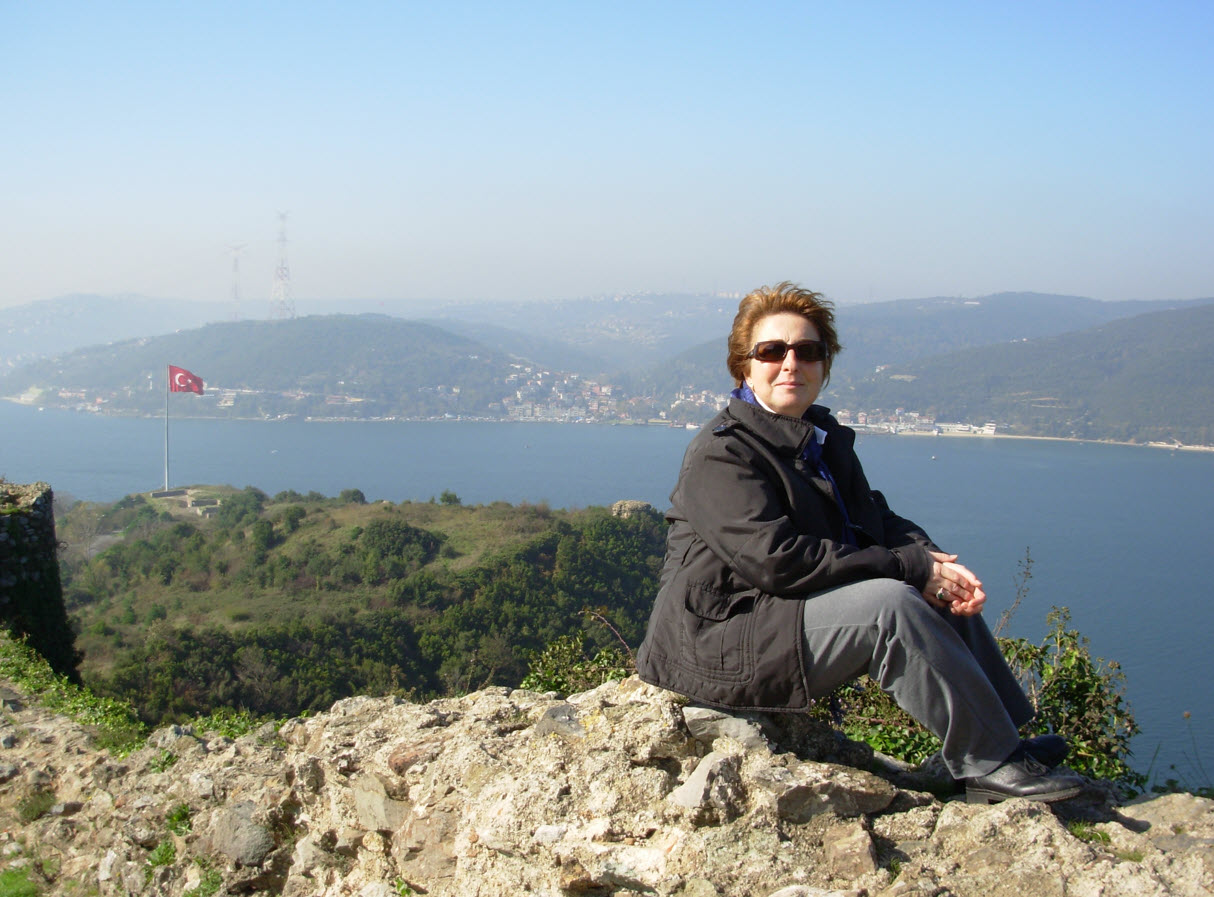
Asnu Bilbam Yalçin, si è laureata all'Università 'La Sapienza' di Roma, con una tesi in Arte Bizantina, relatrice Prof. Fernanda De Maffei. Si è poi spostata all'Università di Istanbul, dove ha ottenuto la posizione di ricercatore e contemporaneamente completato il suo dottorato di ricerca sul Grande Palazzo Imperiale di Costantinopoli secondo le fonti scritte. Prof.ssa associata dal 2003 al 2009 in arte Bizantina. Dal 2009 è prof.ssa ordinaria nel Dipartimento di Storia dell'Arte. Insegna Storia dell'arte Bizantina. Mantiene stabili rapporti con le istituzioni accademiche italiane.
I suoi interessi principali sono: la scultura e la topografia costantinopolitana. Dirige gli scavi archeologici della fortezza medio bizantina di Yoros sul Bosforo con particolare attenzione alla topografia antica e medievale dei suburbi della capitale bizantina. Molte sue ricerche sono concentrate nello studio di Santa Sofia, dove da 10 anni e consulente dei restauri. È consulente anche per Kariye. Ha insegnato come visiting professor all’università Ca’ Foscari di Venezia, e alla Hebrew University di Gerusalemme e tenuto seminari presso le Università di Tessalonica, di Roma.
Michael Alram, è stato Direttore del Gabinetto delle Medaglie del Kunsthistorisches Museum, Vienna e Vice Presidente della Austrian Academy of Sciences (2013-2021). Studioso di numismatica antica, con particolare riferimento all’area iranica e centroasiatica, in cui si segnalano gli studi sulla monetazione degli Unni Iranici e dei Turchi Occidentali. L’orizzonte cronologico dei suoi studi spazia dal VI sec. a.C., con la fondazione dell’impero achemenide, fino alla conquista islamica dell’Asia Centrale e Meridionale. Ha all’attivo numerosi progetti di ricerca di respiro internazionale, che hanno coinvolto diversi importanti musei e istituzioni europei e asiatici. Inoltre, i suoi lavori si legano strettamente all’archeologia e alla storia culturale in generale, favorendo fecondi scambi interdisciplinari. M. Alram è membro di numerose istituzioni nazionali e internazionali ed è stato insignito di prestigiosi premi, tra cui quelli della Royal Numismatic Society (2013), della Gesellschaft für Internationale Geldgeschichte (2014) e la Archer M. Huntington Medal della American Numismatic Society (2016).
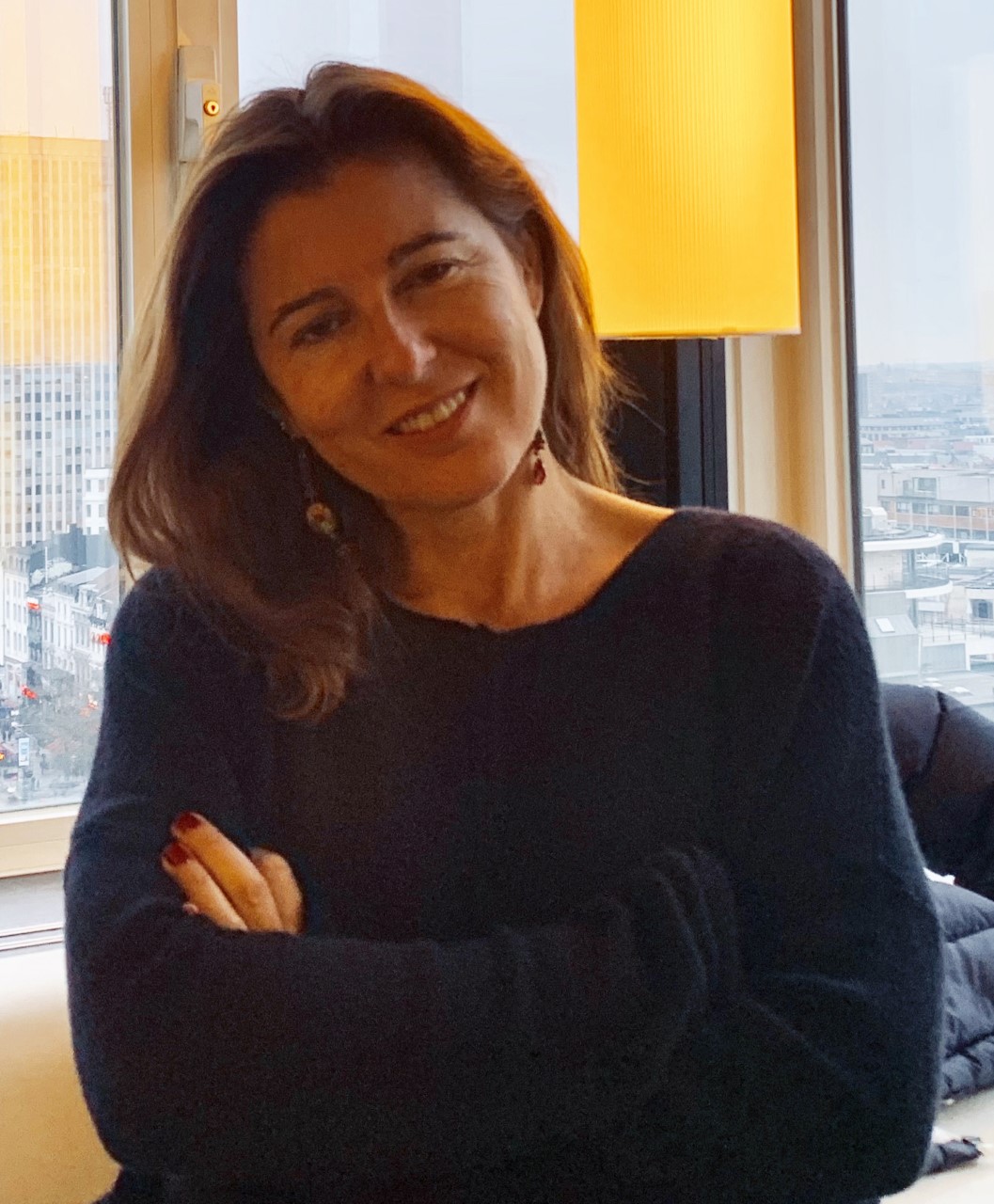
Daniella E. Bar-Yosef è una dei massimi specialisti mondiali nel campo dell’archeomalacologia. Svolge la sua attività presso lo Steinhardt Museum of Natural History dell’Università di Tel Aviv, dove ricopre il ruolo di responsabile delle collezioni paleontologiche e archeomalacologiche. Ha ottenuto il titolo di dottoressa di ricerca (PhD) dalla Hebrew University di Gerusalemme nel 2000. È affiliata al Peabody Museum of Archaeology and Ethnology della Harvard University dal 1992 ed è ricercatrice associata del Sonia and Marco Nadler Institute of Archaeology della Tel Aviv University dal 2015. Nel 2003 ha fondato il gruppo di lavoro sull’archeomalacologia in seno all’International Council for Archaeozoology.
La sua formazione è avvenuta nell’ambito della zooarcheologia e si è poi specializzata nello studio dei molluschi, non solo come risorsa alimentare, ma anche per il loro uso in vari ambiti della produzione. Ha per questo sviluppato un’intensa attività di ricerca sull’ampia e trasversale utilizzazione delle conchiglie nella produzione di strumenti e ornamenti personali. Quest’ultimo interesse di ricerca la ha anche portata a allargare i suoi interessi allo studio dei vaghi di collana in pietra.
Tra i progetti di ricerca attualmente in corso va ricordato lo studio dell’uso dei molluschi e dei manufatti in conchiglia dalla Grotta paleolitica di Manot, nella Galilea occidentale, e dal chiocciolaio epipaleolitico di Dureijat, nella valle del Giordano.
Il Professor John Robert Baines, è un egittologo e accademico britannico in pensione. Dal 1976 al 2013 è stato professore di egittologia al Queen’s College dell’Università di Oxford. Attualmente è Professore Emerito e Fellow del Queen's College e della British Academy (FBA). È inoltre membro dell'American Philosophical Society e dell'Istituto archeologico tedesco, e membro onorario dell'American Oriental Society.
Ha ricoperto incarichi di visiting presso dipartimenti di egittologia, antropologia, storia dell'arte e archeologia e studi sul Vicino Oriente, presso università in Africa, Asia, Europa e Nord America. Nel corso della sua carriera ha integrato lo studio dell'antico Egitto nel discorso più ampio delle scienze umane e sociali.
Ha prestato servizio in organismi nazionali e internazionali per la ricerca in archeologia e continua a essere membro dei comitati editoriali di riviste e collane.
È autore di più di 200 pubblicazioni tra articoli e monografie relative all'antico Egitto. I suoi interessi di ricerca sono molti vasti e attraversano l'arte, la religione, la letteratura, il ruolo della scrittura nella società egiziana, comprese le questioni dell'alfabetizzazione, la formazione e l’ideologia dell’élite, con un particolare focus, in tempi recenti, sull’analisi dell’auto-rappresentazione dei funzionari attraverso i testi autobiografici e i programmi figurativi delle loro tombe.
Tra le sue più significative opere degli ultimi anni, ricordiamo Visual and Written Culture in Ancient Egypt Oxford University Press 2009; High Culture and Experience in Ancient Egypt, Equinox Publishing, 2013; Historical Consciousness and the Use of the Past in the Ancient World (edito in collaborazione con H. van der Blom, Yi Samuel Chen, Tim Rood), Equinox Publishing 2020.
Nicolas Garnier è Direttore scientifico e fondatore del Laboratorio privato N. Garnier (Vic-le-Comte, Francia). È Ricercatore Associato presso il Laboratorio AOROC, CNRS UMR 8546, Ecole Normale Supérieure di Paris-Ulm, Francia. È Ricercatore Associato presso il Laboratorio Miniaturizzazione per la sintesi, l’analisi e la proteomica (MSAP - UAR 3290 - Università di Lille, Francia). È Ricercatore Associato presso il Centre Camille Jullian, Archéologie méditerranéenne et africaine, Maison Méditerranéenne des Sciences de l’Homme, Aix-en-Provence, Francia (UMR CNRS 6573).
Ha al suo attivo diverse esperienze di didattica universitaria, come Lettore di Chimica presso il Dipartimento di Chimica Analitica, Università di Paris VI – Jussieu, Francia (1999-2003) e come Lettore di Chimica fisica (per corsi universitari e post-universitari), per l’Istituto Nazionale del Patrimonio Culturale (INP) Parigi, Francia.
Le sue ricerche e le sue pubblicazioni sono indirizzate principalmente allo sviluppo di metodi analitici che utilizzano la spettrometria di massa, con l'obiettivo di identificare materiali organici antichi, conservati in tracce, degradati e mescolati, negli oggetti archeologici. Dopo aver sviluppato nuovi metodi per l'analisi dei lipidi non volatili utilizzando MALDI-TOF ed elettrospray, ha rivolto la sua attenzione alla frazione organica che è difficile da estrarre dall'argilla (ma anche dal vetro e dal metallo) perché fortemente legata. Lo sviluppo di un nuovo protocollo di estrazione in ambiente acido e anidro ha aperto una nuova strada di ricerca, in particolare per la rilevazione di tracce di uva, vino e bevande fermentate in generale. Nel Laboratorio da lui diretto, che è dotato di spettrometria di massa ad alta risoluzione dal 2019, Garnier sta cercando di spostare le analisi chimiche per l'archeologia verso un approccio metabolomico più globale e completo, lavorando su composti minori come steroli e triterpeni.
Ha al suo attivo l’organizzazione e l’intervento come relatore a convegni internazionali, e la partecipazione a numerosi progetti europei finanziati. Ha collaborato e collabora con numerose missioni archeologiche in Francia, in Spagna, in Italia, in Grecia, a Cipro, in Giordania, in Egitto, in Arabia Saudita, in Turchia e in Iraq.
Ha al suo attivo poco meno di cento articoli, pubblicati in riviste specializzate di chimica e di archeologia.
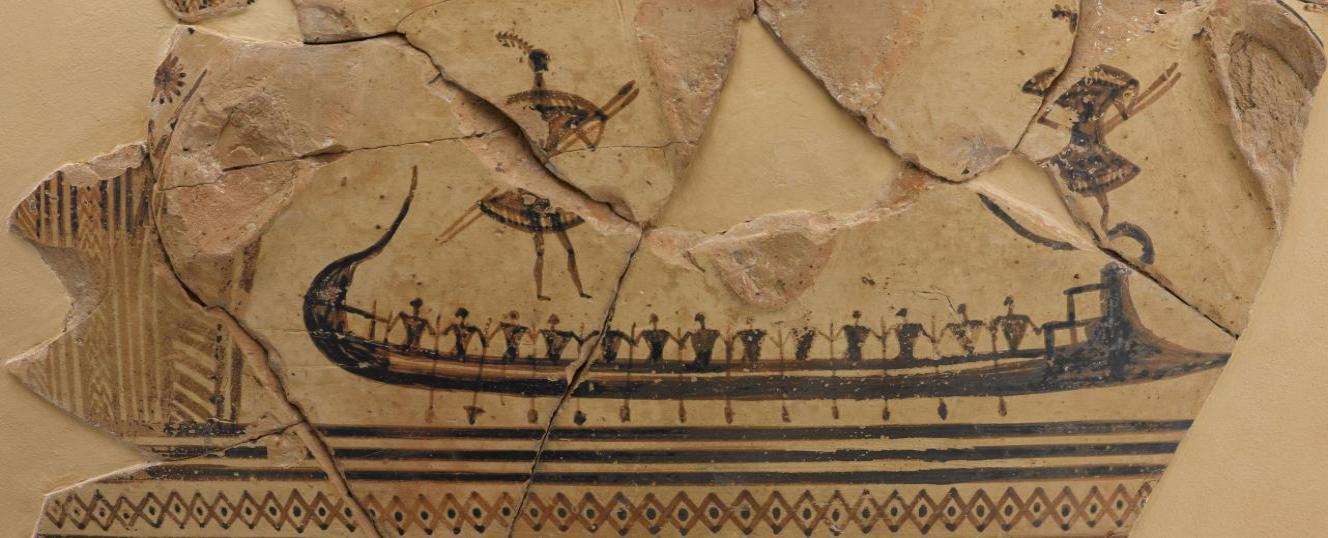
Alexandros Mazarakis Ainian è Professore ordinario di Archeologia Greca alla University of Thessaly (Volos, Grecia). È uno dei massimi specialisti dell’archeologia e dell’architettura greca nella Prima Età del Ferro e nel periodo arcaico e dell’Archeologia Omerica, nonché della religione greca antica e dei santuari dal periodo geometrico a quello classico. Tra le sue numerose pubblicazioni si segnalano le due monografie From Rulers’ Dwellings to Temples. Architecture, Religion and Society in Early Iron Age Greece (1100-700 B.C.)(1997) e Όμηρος και Αρχαιολογία (2000). Ha curato importanti volumi, tra cui la tavola rotonda internazionale Oropos and Euboea in the Early Iron Age (2007), la conferenza internazionale dal titolo The ‘Dark Ages’ Revisited in memory of W.D.E. Coulson (2007/2010), gli Atti della Conferenza internazionale Regional Stories Towards a New Perception of the Early Greek World (2017) e recentemente Les sanctuaires archaïques des Cyclades (2017). Dirige le missioni archeologiche della University of Thessaly ad Oropos (Beozia), Kythnos (Cicladi) e Lathouriza (Attica).
Ha tenuto numerose lezioni e conferenze in università, musei e istituzioni europee, nonché presso importanti università e musei negli Stati Uniti e in Canada. Recentemente ha insegnato per tre anni come visiting professor a Paris IV-Sorbonne ed è stato eletto membro corrispondente dell’Académie des Inscriptions et Belles-Lettres.
Giorgos Sanidas è il maggiore specialista nel campo delle attività metallurgiche e dei ceramisti nel mondo greco nell’Egeo settentrionale, inteso come indagine complessiva sull’evidenza archeologica dei luoghi e contesti della produzione e sugli aspetti tecnologici della produzione degli oggetti in metallo e dei prodotti ceramici e coroplastici. La sua formazione si è svolta interamente presso l'Università di Lille 3, con la laurea triennale in archeologia e la Laurea magistrale in storia antica, fino al conseguimento del Dottorato in Scienze dell'Antichità, con specializzazione in archeologia greca (2004). È Docente HDR all'Università di Lille (2006-), dove insegna archeologia greca, e Ricercatore associato presso l'École française d'Athènes; membro permanente del centro di ricerca Halma (UMR 8164). Coordinatore del programma di ricerca HeMEN (Habitat e Metallurgia nell'Egeo settentrionale): Halma (UMR 8164) - École française d'Athènes (2012 -) è inoltre Co-responsabile del programma di scavo ThANAr (Thasos - approccio settentrionale ad Artemisia), in collaborazione con l'Eforato delle Antichità di Kavala-Thasos e l'École française d’Athènes e conduce in maniera continuativa le indagini archeologiche nell’isola di Thasos dall’età del Ferro (periodo precoloniale) alla tarda antichità (periodo protobizantino).


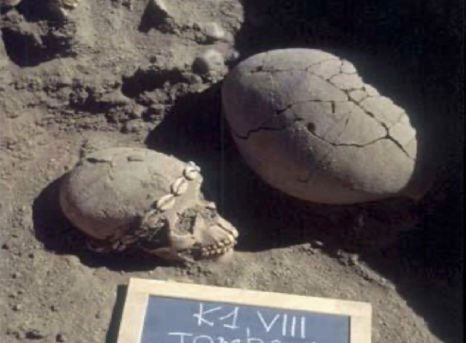
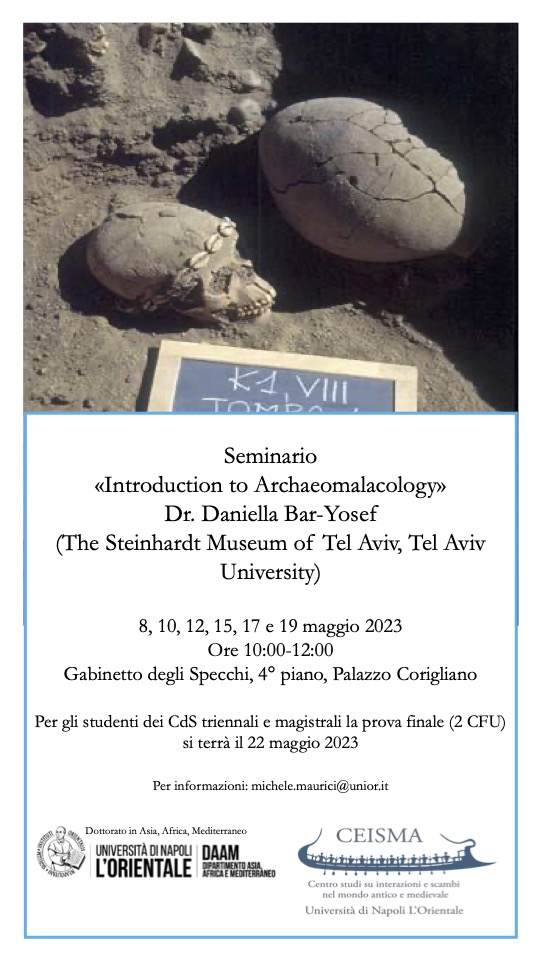
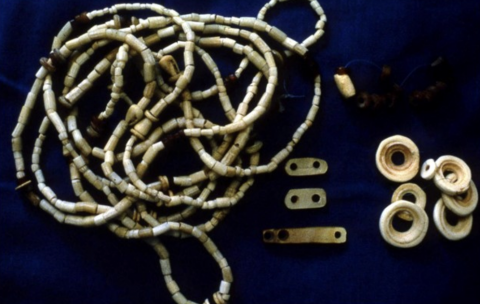
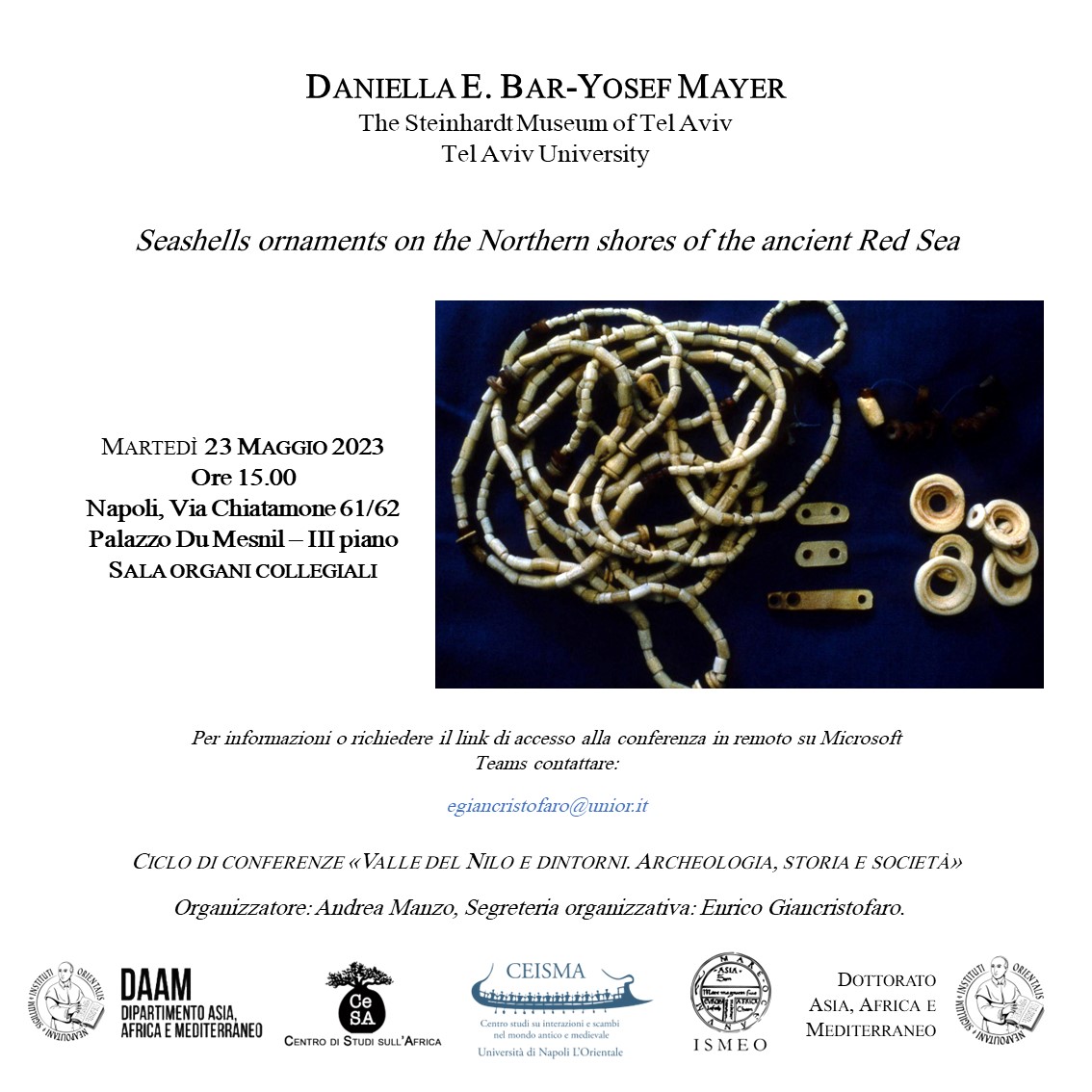
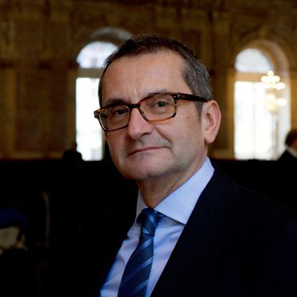
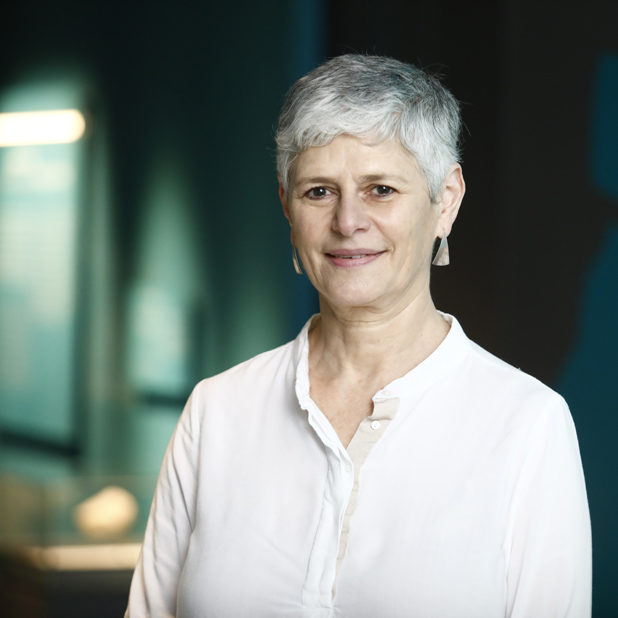 Daniella E. Bar-Yosef è una dei massimi specialisti mondiali nel campo dell’archeomalacologia. Svolge la sua attività presso lo Steinhardt Museum of Natural History dell’Università di Tel Aviv, dove ricopre il ruolo di responsabile delle collezioni paleontologiche e archeomalacologiche. Ha ottenuto il titolo di dottoressa di ricerca (PhD) dalla Hebrew University di Gerusalemme nel 2000. È affiliata al Peabody Museum of Archaeology and Ethnology della Harvard University dal 1992 ed è ricercatrice associata del Sonia and Marco Nadler Institute of Archaeology della Tel Aviv University dal 2015. Nel 2003 ha fondato il gruppo di lavoro sull’archeomalacologia in seno all’International Council for Archaeozoology.
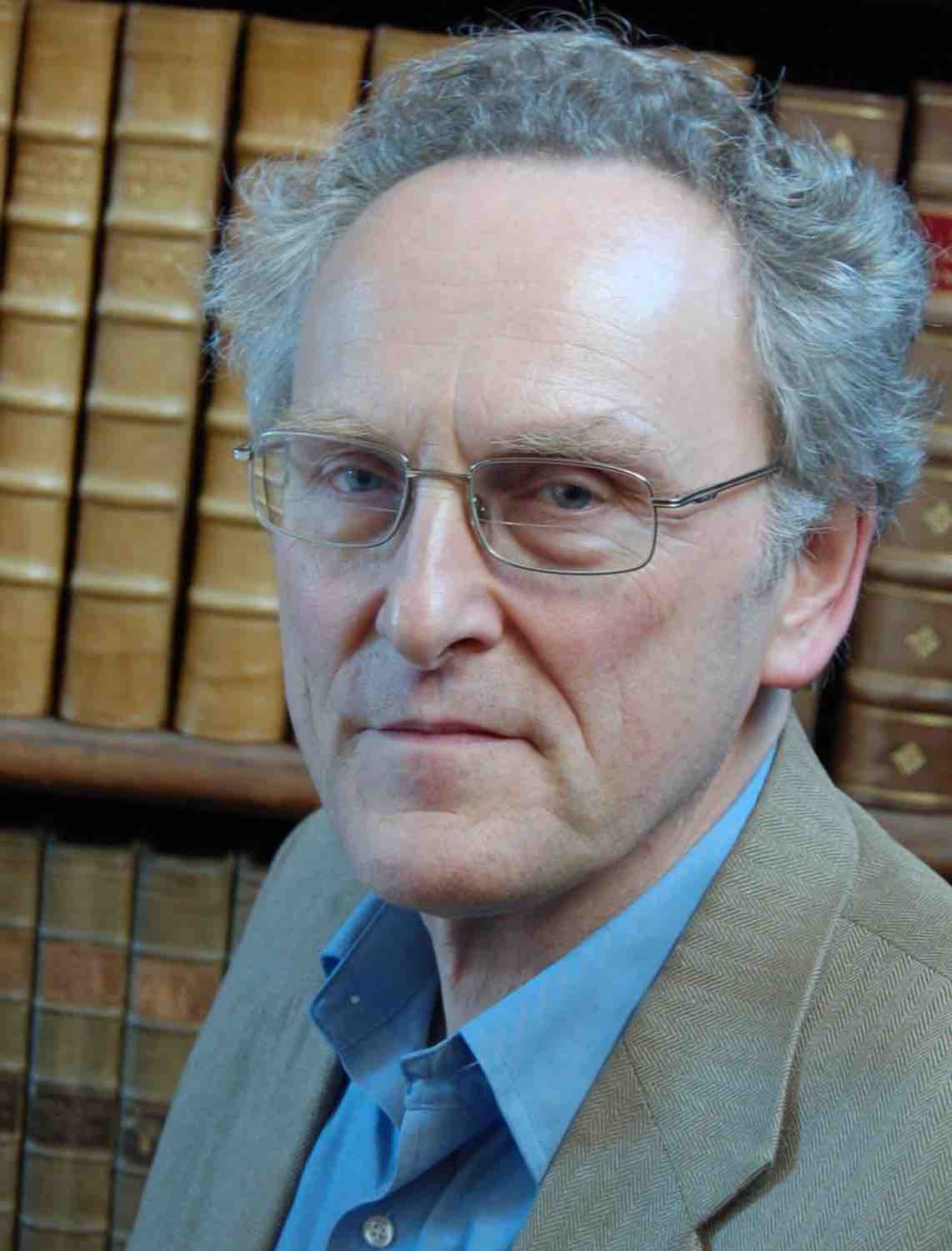 Il Professor John Robert Baines, è un egittologo e accademico britannico in pensione. Dal 1976 al 2013 è stato professore di egittologia al Queen’s College dell’Università di Oxford. Attualmente è Professore Emerito e Fellow del Queen's College e della British Academy (FBA). È inoltre membro dell'American Philosophical Society e dell'Istituto archeologico tedesco, e membro onorario dell'American Oriental Society.
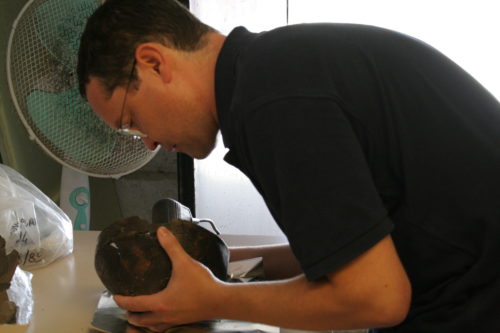 Nicolas Garnier è Direttore scientifico e fondatore del Laboratorio privato N. Garnier (Vic-le-Comte, Francia). È Ricercatore Associato presso il Laboratorio AOROC, CNRS UMR 8546, Ecole Normale Supérieure di Paris-Ulm, Francia. È Ricercatore Associato presso il Laboratorio Miniaturizzazione per la sintesi, l’analisi e la proteomica (MSAP - UAR 3290 - Università di Lille, Francia). È Ricercatore Associato presso il Centre Camille Jullian, Archéologie méditerranéenne et africaine, Maison Méditerranéenne des Sciences de l’Homme, Aix-en-Provence, Francia (UMR CNRS 6573).
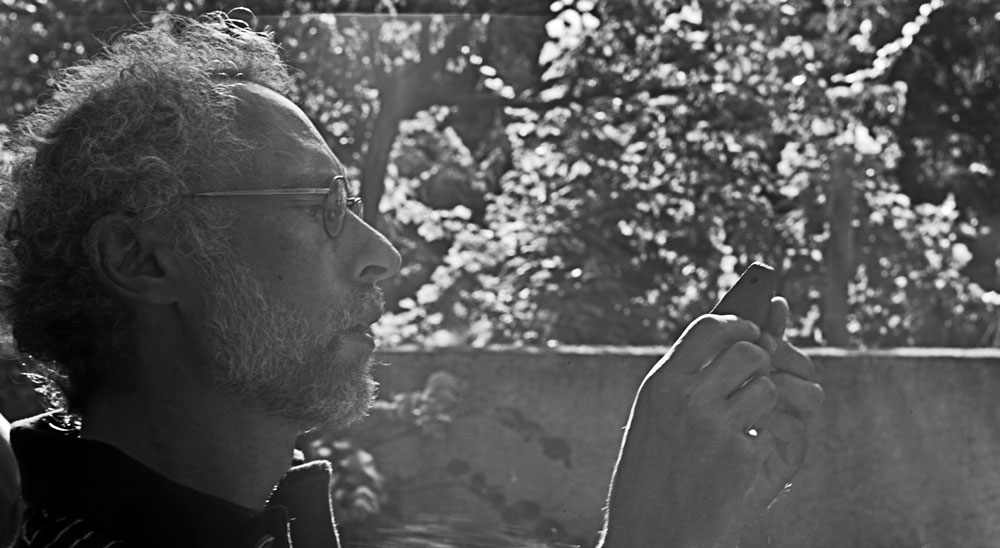 Alexandros Mazarakis Ainian è Professore ordinario di Archeologia Greca alla University of Thessaly (Volos, Grecia). È uno dei massimi specialisti dell’archeologia e dell’architettura greca nella Prima Età del Ferro e nel periodo arcaico e dell’Archeologia Omerica, nonché della religione greca antica e dei santuari dal periodo geometrico a quello classico. Tra le sue numerose pubblicazioni si segnalano le due monografie From Rulers’ Dwellings to Temples. Architecture, Religion and Society in Early Iron Age Greece (1100-700 B.C.)(1997) e Όμηρος και Αρχαιολογία (2000). Ha curato importanti volumi, tra cui la tavola rotonda internazionale Oropos and Euboea in the Early Iron Age (2007), la conferenza internazionale dal titolo The ‘Dark Ages’ Revisited in memory of W.D.E. Coulson (2007/2010), gli Atti della Conferenza internazionale Regional Stories Towards a New Perception of the Early Greek World (2017) e recentemente Les sanctuaires archaïques des Cyclades (2017). Dirige le missioni archeologiche della University of Thessaly ad Oropos (Beozia), Kythnos (Cicladi) e Lathouriza (Attica).
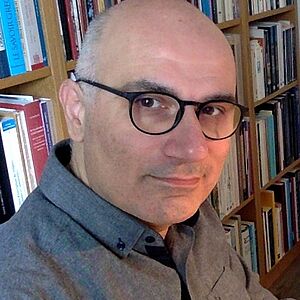 Giorgos Sanidas è il maggiore specialista nel campo delle attività metallurgiche e dei ceramisti nel mondo greco nell’Egeo settentrionale, inteso come indagine complessiva sull’evidenza archeologica dei luoghi e contesti della produzione e sugli aspetti tecnologici della produzione degli oggetti in metallo e dei prodotti ceramici e coroplastici. La sua formazione si è svolta interamente presso l'Università di Lille 3, con la laurea triennale in archeologia e la Laurea magistrale in storia antica, fino al conseguimento del Dottorato in Scienze dell'Antichità, con specializzazione in archeologia greca (2004). È Docente HDR all'Università di Lille (2006-), dove insegna archeologia greca, e Ricercatore associato presso l'École française d'Athènes; membro permanente del centro di ricerca Halma (UMR 8164). Coordinatore del programma di ricerca HeMEN (Habitat e Metallurgia nell'Egeo settentrionale): Halma (UMR 8164) - École française d'Athènes (2012 -) è inoltre Co-responsabile del programma di scavo ThANAr (Thasos - approccio settentrionale ad Artemisia), in collaborazione con l'Eforato delle Antichità di Kavala-Thasos e l'École française d’Athènes e conduce in maniera continuativa le indagini archeologiche nell’isola di Thasos dall’età del Ferro (periodo precoloniale) alla tarda antichità (periodo protobizantino).